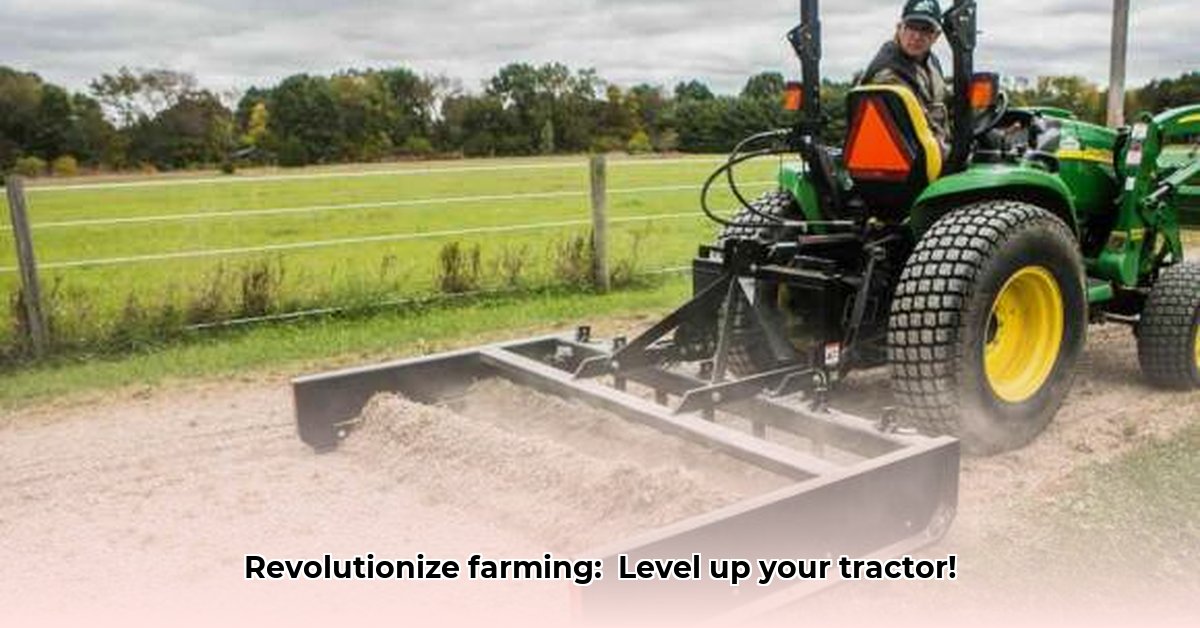
Understanding Land Planes and Their Role in Sustainable Agriculture
Leveling your farmland using a tractor-mounted land plane offers significant advantages for sustainable farming practices. By creating a uniform land surface, you improve water management, reduce soil erosion, and ultimately boost crop yields. This guide provides a comprehensive understanding of land planes, helping you select, operate, and maintain the right equipment for your specific needs. Efficient land leveling is pivotal for maximizing farm productivity while minimizing environmental impact. Don't just take our word for it – increased crop yields due to even water distribution are a proven outcome of proper land leveling. For more information on tractor options, check out this helpful resource.
Types of Tractor Land Levelers: A Comparative Analysis
Choosing the right land leveler is crucial. The ideal choice hinges on your soil type, budget, and the scale of your land leveling project. Several key features differentiate various land plane models:
Key Features and Their Implications
Blade Angle: This dictates the aggressiveness of soil movement. A steeper angle moves more soil per pass – ideal for major leveling but potentially disruptive for delicate soils.
Side Plate Length: Determines the ground covered per pass. Longer plates are more efficient for large areas, while shorter plates offer greater precision in tighter spaces.
Scarifiers (Optional): These crucial teeth break up compacted soil ("hardpan"), improving water penetration and root growth. Essential for clay or heavily compacted soils, but unnecessary for loose, workable soil. Would you use a scalpel to cut down a tree? Similarly, choosing the right tool based on soil type is crucial.
Comparing Common Land Leveler Types
Here's a comparison of common land leveler types, highlighting their suitability for different soil conditions and project scopes:
| Land Leveler Type | Soil Type Suitability | Cost | Precision | Maintenance | Ideal Project Scope |
|---|---|---|---|---|---|
| Box Scraper | Light to moderately compacted | Low | Low | Low | Initial rough leveling of smaller areas |
| Land Plane | Varied, good for fine grading | Medium | Medium | Medium | Fine leveling after initial grading, various soil types |
| Laser-Guided Leveler | Varied, ideal for large projects | High | High | High | Large-scale projects requiring extreme accuracy |
| Leveler w/ Scarifiers | Heavily compacted, rocky soils | Medium to High | Medium to High | Medium to High | Breaking up hardpan before leveling, challenging soils |
Choosing the Right Land Leveler: A Decision-Making Framework
Selecting the appropriate land leveler involves a systematic approach:
Assess Your Soil: Determine your soil type (clay, sandy loam, etc.) and compaction level. This fundamental step dictates the necessary equipment and techniques.
Define Your Project Scope: Consider the area's size, the desired precision, and your budget constraints.
Select the Land Leveler: Based on your soil assessment and project scope use the above comparison table to choose the most suitable option. Consult with equipment dealers or agricultural experts for tailored advice – a second opinion often provides valuable clarity.
Confirm Tractor Compatibility: Ensure your tractor possesses sufficient horsepower and hydraulic capacity to operate the chosen land leveler efficiently and safely.
Operating a Land Leveler: A Step-by-Step Guide
Safe and effective operation is paramount.
Pre-Operation Inspection: Thoroughly inspect the land plane for damage, check fluid levels, and ensure all safety mechanisms function correctly.
Adjusting Settings: Set the blade angle and depth according to your soil type and leveling goals. Start conservatively and make gradual adjustments.
Leveling Your Land: Begin slowly and steadily, overlapping passes slightly for uniform coverage. Avoid sudden movements; smooth, consistent operation is key.
Monitoring Progress: Regularly check progress and adjust settings as needed to maintain uniformity.
Post-Operation Care: Clean the land plane thoroughly, lubricate moving parts, and inspect for damage.
Maintenance and Repair: Ensuring Longevity
Regular maintenance is crucial for preventing costly repairs and ensuring the long-term performance of your land leveler.
| Maintenance Task | Frequency | Importance | Notes |
|---|---|---|---|
| Inspect Blade for Damage | After Each Use | High | Look for bends, cracks, or excessive wear. |
| Lubricate Moving Parts | Weekly | Medium | Use the recommended grease. |
| Check Hydraulic Fluid Level | Monthly | High | Low fluid can cause serious damage. |
| Inspect for Loose Fasteners | Monthly | Medium | Tighten as needed. |
Case Studies: Real-World Success Stories
Farmers who have implemented land leveling report significant improvements in water management, reduced erosion, and increased crop yields. These real-world examples underscore the effectiveness of this sustainable farming practice. One farmer reported a 15% increase in yield after leveling his fields, clearly demonstrating the return on investment.
Regulatory Considerations: Compliance and Best Practices
Always check with your local authorities to understand any regulations concerning land use, soil conservation, and water management before initiating your land leveling project.
Conclusion: Investing in Sustainable Farming Practices
Investing in a land plane and employing proper land management techniques yields significant long-term benefits for your farm's sustainability and profitability. By understanding land plane types and following safe operating and maintenance procedures, you'll improve soil health and boost overall farm productivity. Remember, sustainable practices are not just environmentally responsible – they also contribute to the long-term financial health of your farm.